Human Figure Holding Wrench: A Practical Guide to Versatile Vector Art for Designers and Makers
In the realm of graphic design and digital illustration, specific iconography often carries more weight than abstract shapes. The Human Figure Holding Wrench is a distinct visual element that immediately communicates themes of repair, maintenance, craftsmanship, and technical skill. Unlike generic tool icons or abstract gears, this imagery combines human agency with mechanical function, creating a narrative of hands-on work. For designers, crafters, and business owners, understanding the utility and application of this specific asset is crucial for making informed decisions about branding, marketing materials, and creative projects.
This article explores the characteristics of the Human Figure Holding Wrench graphic, evaluates its suitability across various media, and compares it with alternative design approaches. By examining file formats, resolution requirements, and practical use cases, readers can determine if this specific vector art aligns with their project goals or if a different stylistic approach might serve them better.
Defining the Visual Identity and Technical Specifications
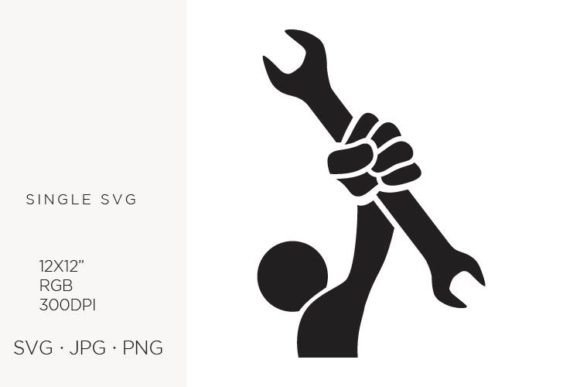
The Human Figure Holding Wrench is typically rendered as a stylized silhouette or line-art representation where a person is depicted in an active pose gripping a wrench. This composition is designed to be scalable and recognizable even at small sizes, which is essential for logo design and web icons. What makes this specific graphic distinct is its dual focus: it represents both the worker and the tool, suggesting reliability and personal service rather than just automated machinery.
From a technical standpoint, high-quality versions of this asset are created in vector programs like Adobe Illustrator. The standard delivery usually includes an SVG (Scalable Vector Graphics) file, which is the industry standard for web-based graphics due to its infinite scalability without quality loss. Additionally, raster formats such as JPG and PNG are often provided to accommodate print workflows and software that does not support vector files. These files are typically set up on a 12 x 12 inch artboard at 300 DPI (dots per inch) using an RGB color palette, ensuring they are ready for both digital screens and high-resolution printing.
The choice of format significantly impacts how the graphic performs. While the SVG allows for crisp edges on any screen size, the PNG version with a transparent background offers flexibility for layering over photos or colored backgrounds. Understanding these technical distinctions helps users avoid common pitfalls, such as pixelation when enlarging a low-resolution image or color shifts when converting from RGB to CMYK for professional printing.
Comparing Vector Assets with Alternative Design Approaches
When selecting imagery for a brand or project, the Human Figure Holding Wrench competes with several other visual strategies. One common alternative is the use of isolated tool icons, such as a standalone wrench, hammer, or gear. While these symbols are clean and minimalist, they lack the human element. A standalone wrench suggests a product or a tool, whereas the figure holding the wrench suggests a service provider, a mechanic, or a DIY enthusiast.
Isolated Tool Icons vs. Human Figures:
- Clarity: Isolated tools are often faster to process visually but can feel impersonal.
- Narrative: The Human Figure Holding Wrench tells a story of action and expertise.
- Versatility: Human figures can be adapted to show different emotions or postures, while static tools remain rigid.
Another comparison point is the style of the artwork itself. Some designers opt for photorealistic images of mechanics at work. While photographs offer authenticity, they are often difficult to integrate into logos or stationery without appearing cluttered. They also require higher file management overhead compared to lightweight vector files. In contrast, the stylized Human Figure Holding Wrench offers a balance between realism and abstraction, making it easier to adapt to various color schemes and layouts.
Furthermore, comparing custom illustrations against stock vector libraries reveals another tradeoff. Custom art ensures uniqueness but requires significant time and budget. Stock assets like the Human Figure Holding Wrench provide immediate access to professional-grade graphics at a fraction of the cost. However, users must evaluate whether the specific pose and style fit their unique brand identity or if the image is too generic for their needs.
Evaluating Strengths and Tradeoffs for Specific Use Cases
The decision to utilize the Human Figure Holding Wrench depends heavily on the intended application. Its strengths lie in its versatility and clear communication of purpose. For businesses in the automotive, plumbing, HVAC, or general repair sectors, this icon serves as an instant visual cue. It bridges the gap between the customer's problem (a broken item) and the solution (a skilled person fixing it).
Best-Fit Situations:
- Service-Based Logos: Ideal for companies emphasizing personal service, such as "Bob's Auto Repair" or "Home Fix-It Pros."
- Web and App Icons: The SVG format ensures the image remains sharp on mobile devices and responsive websites.
- Printed Stationery: At 300 DPI, the raster versions are suitable for business cards, letterheads, and invoices.
- Craft and DIY Projects: The clean lines make it perfect for laser cutting, vinyl decals, and embroidery designs.
However, there are tradeoffs to consider. The primary limitation is the potential for the image to appear cliché if used without modification. Because the concept of a person holding a tool is common in the trade industry, simply downloading the file and using it as-is may result in a brand identity that lacks differentiation. To mitigate this, designers should leverage the vector nature of the file to alter colors, simplify lines, or combine the figure with other brand elements.
Additionally, the RGB color palette mentioned in the file specifications is optimized for screens. If the end goal is large-format outdoor signage or magazine printing, the user must convert the colors to CMYK to ensure accuracy. Relying solely on RGB values for print can lead to duller or shifted colors, particularly in deep blues and greens. This technical nuance is a critical factor for professionals managing print production.
Practical Applications Across Media and Industries
The adaptability of the Human Figure Holding Wrench extends beyond traditional corporate branding. Its clean geometry and universal theme make it a valuable resource for a wide range of creative endeavors. In the realm of handmade crafts, this graphic can be used to create personalized wall art, serving as a tribute to family members who work in trades or as decorative pieces for workshops and garages.
For event planning, the icon can be integrated into invitations, announcements, and party decor for themed gatherings, such as a "mechanic's birthday bash" or a community workshop launch. The ability to scale the image without losing quality means it works equally well on a small favor tag or a large banner backdrop.
In the jewelry and accessories market, the simplified lines of the vector art translate well into metal stamps, pendants, or enamel pins. The 12x12 inch artboard provides ample space for detail, allowing creators to extract smaller sections of the design for intricate applications. Similarly, in web design, the SVG format allows developers to manipulate the stroke width and fill colors via CSS, enabling dynamic interactions that respond to user actions, such as hovering over a "Contact Us" button.
Stationery designers can also benefit from these assets. Whether creating wedding invitations with a rustic, DIY theme or corporate memo pads for engineering firms, the Human Figure Holding Wrench adds a thematic touch that resonates with the target audience. The key is to treat the file not just as a finished product, but as a foundational element that can be customized to fit the broader design system.
Decision Factors: When to Choose This Asset and When to Look Elsewhere
Determining whether the Human Figure Holding Wrench is the right choice requires a honest assessment of project requirements. If the goal is to convey trust, manual skill, and direct service, this asset is highly effective. It is particularly suited for small to medium-sized businesses that want to emphasize the human connection behind their services. The availability of multiple file formats (SVG, JPG, PNG) further supports this choice by covering most standard workflow needs.
However, there are scenarios where this option may not be the best fit. If a brand aims for a purely futuristic, high-tech, or automated image, a human figure might contradict the message. In industries like software development or AI robotics, abstract geometric patterns or circuit-board motifs might communicate innovation more effectively than a person with a physical tool.
Similarly, if a project demands extreme customization that goes beyond simple color changes or resizing, relying on a pre-made vector file could become limiting. In such cases, commissioning a fully custom illustration from scratch might yield a more unique result, albeit at a higher cost and longer timeline. Users should also consider the legal aspects; while many stock assets allow for commercial use, it is always prudent to verify the licensing terms to ensure the Human Figure Holding Wrench can be used for the specific scope of the project, especially for merchandise resale.
Ultimately, the value of the Human Figure Holding Wrench lies in its balance of clarity, versatility, and ease of use. By understanding its technical specifications, comparing it against alternatives, and evaluating the specific needs of the project, designers and makers can confidently decide if this graphic element will enhance their work or if a different path is required. Whether for a sleek website logo or a heartfelt handmade card, this asset offers a robust foundation for creative expression.